August 22, 2026
Designing a Dressing Room That Actually Works: A Practical Guide
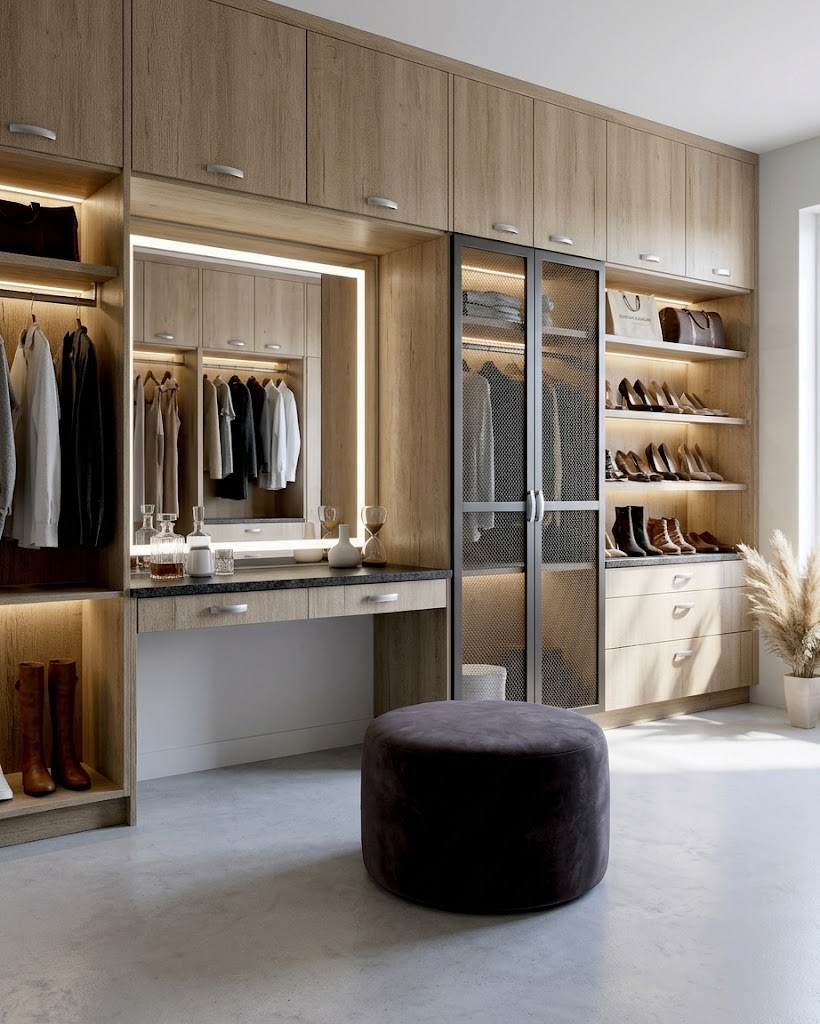
A dressing room is one of the few rooms in a home that's used every single day, twice a day, by the same person — which makes it one of the least forgiving spaces to get wrong. A beautiful dressing room that doesn't actually organize your wardrobe correctly becomes a source of daily friction rather than daily pleasure. Here's how to think through the design properly.
**Start with an honest inventory, not an aspirational one.**
Before any layout decision, count what you actually own: how many hanging garments (split into long and short), how many folded items, shoes, bags, accessories. Most people underestimate this by a wide margin. Designing storage for the wardrobe you wish you had, rather than the one you actually have, is the single most common reason dressing rooms feel cramped within a year of installation.
**Hanging space needs more variety than people expect.**
A single hanging rod height doesn't work for a real wardrobe. You typically need: a long-hang section (dresses, coats), a double-hang section (shirts over trousers, doubling capacity), and often a slightly lower rod for frequently-used items within easy reach. Getting this mix wrong is why so many dressing rooms end up with wasted vertical space above shirts, while the floor is cluttered with things that had nowhere else to go.
**Drawers do more work than shelves for most items.**
Folded clothing, underwear, accessories, and jewelry are almost always better in drawers than on open shelves, because shelves require the stack to be lifted off to reach anything below the top item, and stacks inevitably get messy. Deep drawers with dividers, and shallow drawers for jewelry and accessories, keep things genuinely accessible rather than just present.
**Shoe storage should match how you actually retrieve shoes.**
Angled shoe shelving looks elegant but works best for shoes you access occasionally. For daily-wear shoes, flat shelving or drawers you can see into at a glance tends to get used correctly, while angled display shelving for special-occasion shoes doubles as a genuinely attractive feature.
**Glass-front cabinetry is a design choice, not just a storage one.**
Glass fronts on a few key cabinets — for bags, a curated shoe collection, or special pieces — turn a section of the dressing room into a display, which is part of why dressing rooms have become a genuine architectural feature rather than a purely functional closet. The trade-off is that glass-front sections need to be curated and kept tidy, since they're visible even with the doors closed.
**Lighting inside cabinetry matters more than people expect.**
Interior LED strips inside hanging sections and drawers make a genuine daily difference — being able to actually see what you're choosing between at 7am, rather than guessing in shadow, is one of those details that's invisible in a photo but felt every single day.
**Leave room to breathe — don't fill every millimeter.**
It's tempting to maximize every inch of storage during planning, but a dressing room with zero spare capacity feels cramped the moment your wardrobe grows even slightly, which it always does. Leaving roughly 10-15% additional capacity beyond your current inventory means the room still functions well two or three years in, rather than needing a redesign.
**Finish choices should match how the room is actually lit and used.**
A dressing room without natural daylight benefits from lighter interior finishes inside cabinets — it's easier to see contents and colors clearly. High-gloss finishes show fingerprints and dust more readily in a room that's touched constantly; a soft matte or satin finish tends to hold up better day to day while still looking refined.
A well-designed dressing room isn't about maximizing storage volume — it's about matching the layout to how you actually get dressed, retrieve items, and put things away, every single morning and evening. That's the level of detail we go through with every dressing room project: starting with an honest conversation about what you own and how you use the space, before a single cabinet is designed.